The Lion, The Wasps, and The Wardrobe
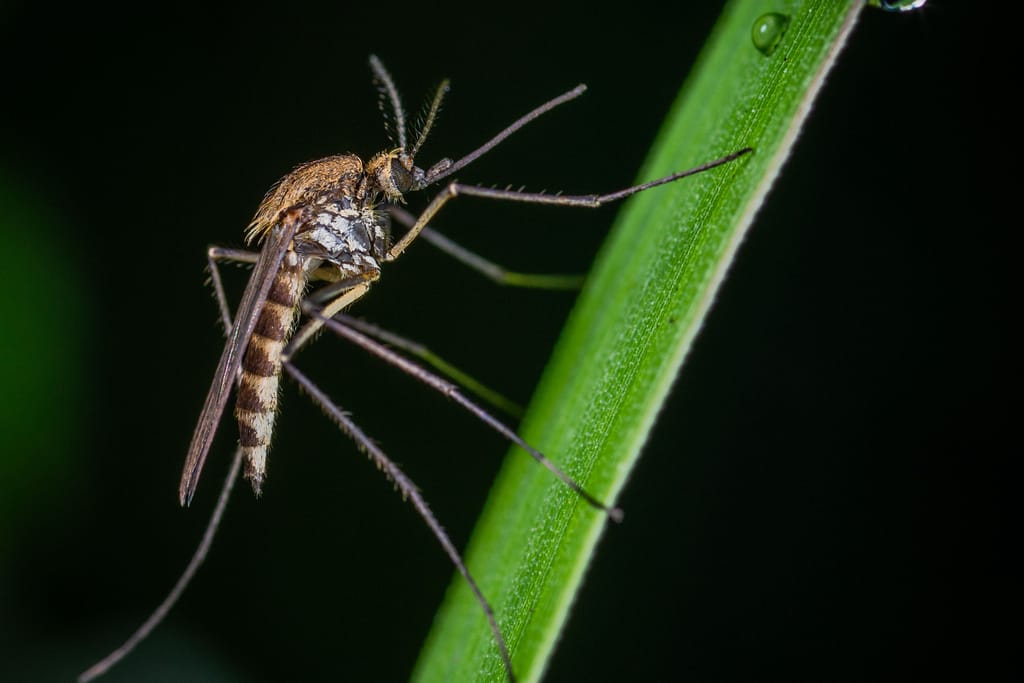
Picture by Wolfgang Hasselm
Artilcle By Helen Lovell-Wayne, MS
hlovell@gmail.com
https://agreenerftr.com/
https://www.instagram.com/agreenerftr/
https://www.linkedin.com/in/helen-lovell-wayne/
This paper was written with the sole intention of informing consumers about the products they may currently be buying and using. Hopefully, with enough demand from consumers, industries will supply safer and more sustainable products.
In the modern era humans have a complicated relationship with wasps. On the one hand wasps are an irritating presence at picnics and other outdoor dining in the late summer. They land on foods containing sugar or meat and threaten to sting those that shoo them away. However, wasps are also an integral part of the ecosystem. They provide a wide variety of ecosystem services unnoticed by most people, such as predation of pest species and pollination (Fazi, L. et al. 2024).
As with all aspects of wildlife there is nuance. Some wasps are non-native while others are native and these are further divided into solitary and social subgroups. But for the sake of simplicity this paper will concentrate on native social wasps.
🪴Wasps Kill Insect Pests 🌳
Social wasps are beneficial to people, as they prey upon many agricultural, garden and forest insect pests. These wasps’ ecology aids in their effectiveness in diminishing harmful pests. Social wasps have large population sizes and centrally placed foraging locations. Plus, they establish high-density populations in both natural and artificial human-constructed environments with relative ease (Southon, R. er al. 2019). Additionally social wasps also tend to fixate on the most abundant prey source.
As voracios predators, social wasps drastically reduce pest populations. These predatory wasps have a generalist diet, feeding especially on Lepidoptera and Diptera (the main insect orders of crop pests). As a result of their efficiency, social wasps act as natural biologicl control agents against pest species in some agricultural ecosystems (Southon, R. er al. 2019).
🌾Wasps Protect Agricultural Crops👨🏽🌾
To understand the extent of social wasps usefulness, here are some statistics. Agricultural arthropod pests alone are thought to be responsible for losses of 18–26% of annual crop yield worldwide. The economic cost is in excess of US$ 470 billion. Insects, including wasps, provide an estimated $195 billion to $385 billion in global crop pollination services annually (R. Catania et al 2023). In other words, using their natural abilities social wasps save farmers and therefore consumers a lot of money (Southon, R. er al. 2019).
Unfortunately, the move to sustainable pesticides might be the undoing of wasps. There has been increased attention in recent years toward biopesticides. Synthetic pesticides (or chemical pesticides) poison all living creatures. As a result, there has been a push toward biopesticides (pesticides created from natural sources such as plants or bacteria). These compounds have been shown to be safe for mammals and reptiles. However, the effect on non-target insects has not been studied extensively. Unfortunately, the few studies that exist show that biopesticides are causing harm to non-target insects such as wasps (Cappa, F. el al. 2024).
☠️Wasps Get Killed By Biopesticides 🚿
Some enterprising scientists decided to test the effect of biopesticides on wasps. They found biopesticides can endanger and sometimes kill wasp workers, and the foundresses (the females that survive the winter to produce the brood in the spring) (Cappa, F. el al. 2024). Forager wasps that do survive direct biopesticide exposure, can return to their colonies and transfer contaminated items (e.g. nest material or food) which in turn can contaminate both adult nestmates and the developing brood (Cappa, F. el al. 2024). Most of the biopesticides tested cause either immediate death, or death within a few weeks.
Other scientists found that biopesticide mortality to wasps is not all encompassing. Some biopesticides cause more mortality and sublethal effects than others. Beauveria bassiana a fungus utilized in many commerical products, serves as a harmful biopesticide. Farmers, veterinarians and foresters use it to control many arthropod pests. Beauveria bassiana has been advertised as safe for non-target insects. Consumers are told that its impact on non-target species is negligible. However, exposure can alter individual social wasp activity and reduce the survival of exposed workers. Additionally it can impair the reproductive ability of foundresses, and induce the removal of exposed brood, ultimately leading to premature colony failure (Cappa, F. el al. 2024).
🍄🟫Social Wasps Population Decline 🥚
Furthermore, it can cause a reduction in ovary development and a decreased rate of egg-laying. Resulting in a considerable impact on the social environment of the nest. Particularly when the first workers start to emerge, as they may not recognize the exposed foundress as rightful dominant individual in the colony (Cappa, F. el al. 2024).
The sublethal effect of other biopesticides on non-target insects depends on several factors. Including but not limited to: species, age, sex, caste and physiological condition. As well as the type and concentration of the active ingredient(s) and the exposure route.
🚫Wasps Abhor a Smell 👃
Which puts people in a quandary. How do we control wasps without harming them. At present there does not appear to be a one size fits all solution to this situation. But there are some techniques that work when the conditions are right. To begin with figure out what wasps are common in your geographic area. Each wasp has one smell that is quite effective at repelling to them. To learn more about controlling insect populations on your land without pesticides read A Bluebird on my Shoulder, or Bat in the Belfry.
One technique is using smells to repel them. Various essential oils and their chemical components act as powerful spatial repellents for social wasps (Zhang, Q., Schneidmiller, and Hoover, D. 2012). Do some research and find out what is the most common social wasp on your area. Then find out the smell that most repels them. Common replant smells include: clove oil, lemongrass oil, spearmint oil, wintergreen oil, sage oil, rosemary oil, geranium oil and lavender oil; these are the most effective repellants (Zhang, Q., Schneidmiller, and Hoover, D. 2012).
🏡Wasps and Summer Fun 🥣
Put essential oils with that smell in water and spray the area that you do not want wasps building nests. Additionally, wasps are territorial and tend not to build nests near other warps. So putting up fake nests can sometimes be effective. Additionally caulk up small holes in your house. Be especially diligent around pipes and hoses that go into the house.
If you want to eat outside during wasp season here are two techniques to try. First put essential oils with the smell that the wasps in your aera don’t like in a bow with water near to where you are eating. Secondly put a plate out of food for the wasps. Put it a distance away from your eating area. That way the wasps will have a carrot and a stick. Remember ask not what wasp can do for you but what you can do for the wasps.