An Insect In The Ointment

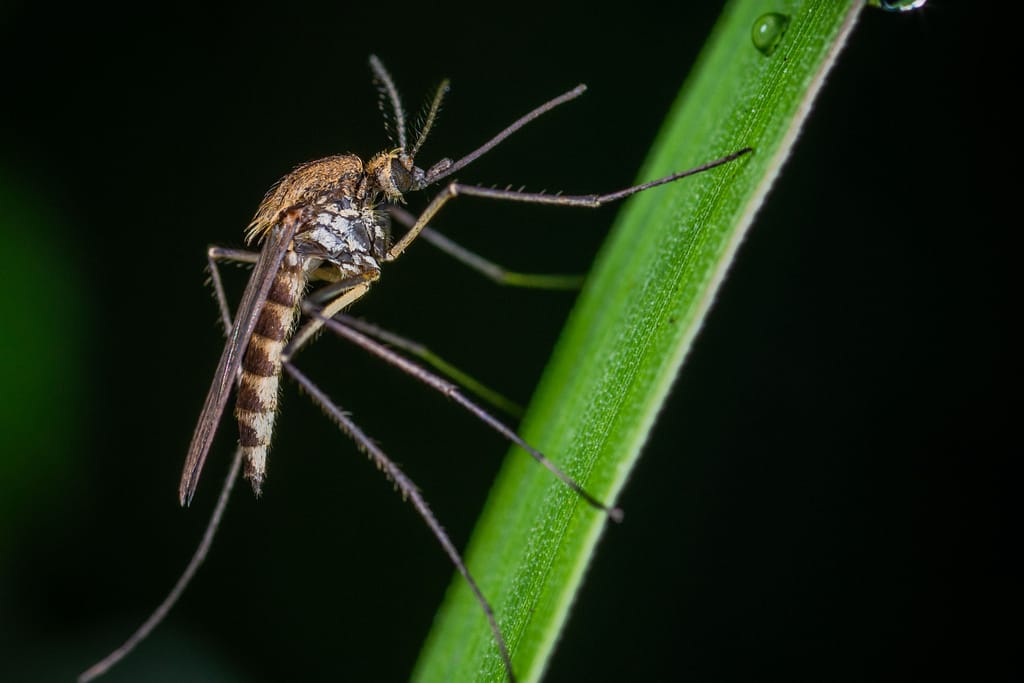
Picture by Egor Kameler
Article By Helen Lovell-Wayne, MS
hlovell@gmail.com
agreenerftr.com/
https://www.instagram.com/agreenerftr/
https://www.linkedin.com/in/helen-lovell-wayne/
This paper was written with the sole intention of informing consumers about the products they may currently be buying. Hopefully, with enough demand from consumers, industries will supply safer and more sustainable products.
Insects are essential to all functioning terrestrial ecosystems. Vertebrates either hunt insects as prey or tolerate them as a nuisance. Some insects have adapted to use other animals as part of their lifecycle. Usually this involves an irritating bite, which sometimes comes with bacteria that can cause terrible diseases. So humans are fighting back with insect repellents.
Unfortunately, the same modern technology that is repelling insects is also imperiling our bodies and the planet, a situation that puts modern people in a quandary. They want to protect themselves from unpleasant bites and possible infection, but they don’t want to sicken themselves in the process. For instance: during the Zika virus epidemic, sales of insect repellent in Brazil and the United States increased by over 100% compared to the previous year (Almeida, R et al 2018). Citizens were in a lose-lose situation. Both using and not using chemical insect repellents could lead to injurious diseases.
🏛️History of Insect Repellents📃
Using insect repellents is not a new phenomenon. In the United States, it has been recorded that native American cultures relied heavily on plants to repel biting insects (S. Moore and Debboun, M.). In other parts of the world, similar technologies evolved. Ancient Egyptians used oils to deter insects when they slept (S. Moore and Debboun, M.). The Romans rubbed a concoction of vinegar, manna, and oil on the body to repel gnats (S. Moore and Debboun). In South Asia, writings from the seventeenth century contain references to the burning of plants to repel biting insects (S. Moore and Debboun, M.).
Unfortunately, in the modern day manufacturers derive insect repellants from chemicals. DEET is the active ingredient in most insect repellents in the Western world. This compound was distributed first to the armed forces and then to the general public in the 1960s. More than 50 years after its discovery. DEET remains the most effective chemical repellent in use today.
🦎Chemical Insect Repellents and Ecology🦟
The other highly utilized ingredient in chemical repellents is picaridin. Unfortunately, both DEET and picaridin are wreaking havoc on ecosystems and on our bodies. Repellents containing picaridin may have potentially serious direct implications for ecological health (Almeida, R et al 2018). Studies show that larval salamanders suffer severe mortality and developmental deformities when exposed to small amounts of picaridin (Almeida, R et al 2018).
Amphibians connect the energy and matter between aquatic and terrestrial ecosystems (Almeida, R et al 2018. As a group, they control ecosystem structure and function through predation (Almeida, R et al 2018. Salamanders are voracious predators of mosquito larvae, so a high mortality of salamander larvae caused by exposure to picaridin leads to fewer predators. This phenomenon results in more mosquitoes, which causes humans to use more insect repellents in a vicious cycle.
🐀Repellents Effect On Insect Biology 🐟
The other compound found in most chemical insect repellents is DEET, and it affects the digestive system of insects. DEET also causes respiratory stress in rats and in fish. This, in turn effects the nervous systems of people as these chemicals accumulate up the food chain.
In addition, DEET has a few aesthetic drawbacks. For example, it has an unfavorable odor and feels greasy to the touch. Even with these concerns, estimates report that approximaely 30% of the US population uses DEET (Paluch, G. Bartholomay, L., and Coats, J. 2010).
🍃 Eco-friendly Repellents🌿
Asians have historically used smoke containing harmful chemicals to drive away insects. These are no better for humans and the ecology than DEET or picaridin. So the answer lies elsewhere. That is in plants. Manufacturers can derive insect repellents from plant oils.
It is best for your body and the planet for each person to research their particular area of the world. Then find an ecologically friendly insect repellent that is the most effective for local insect pests. Some repellents are better for specific types of insects. Recently (as in the past 10 years), there has been some progress in developing alternative insect repellents.
🪰More Eco-friendly Options🪳
For instance, the essential oil of oregano has been shown to be effective for managing important pests. It is reported to have either lethal or sublethal activity against major insects including: the maize weevil, stored product weevil, red flour beetle, blowfly, bed bugs and ticks (Patel H et al. 2023).
Additionally, vapors from catnip can be used as repellent against seventeen species of insects. Including stable flies and houseflies, as well as American cockroaches, red poultry mites, and disease-containing mosquitoes (Patel H et al. 2023 ). This could be the environmentally friendly DEET of the future. For more information regarding keeping unwanted insects away from you and your property read Tick Tock, Tick Tock or A Bluebird On My Shoulder.
Eco-friendly Insect Repellent Drawbacks🍾
Additionally, properties of the essential oils of four Malaysian plants were found to be effective against the biting of the yellow fever mosquito (Jantan, I. and Zaki, Z. 1999).
Lastly, the efficacy of lemon eucalyptus is comparable to low concentrations of DEET, lasting up to 6 hours for aggressive mosquitoes and 12 hours for less aggressive mosquitoes (Quoc-Bao et al. 2018).
Unfortunately plant based repellants come with a few drawbacks. For instance, they have little persistence in the environment. Most of them tend to disappear quickly. This phenomenon means they are unable to cause toxic bioaccumulation or biomagnification in predators’ bodies. However, they require frequent reapplication. Another drawback is that some environmentally friendly insecticides transform from repelling insects to attracting them over a period of a few months.
🍊Repellent Concluding Remarks🦟
On the horizon, there is hope. One compound stands out above the rest. It is called nootkatone. It is an extract from grapefruit that has been approved by the FDA as an insect repellent. Nootakatone has the same effectiveness as DEET. Currently, there is no method to create it in sufficient quantity for mass production. A single application lasts anywhere from 2-8 hours, similar to DEET. If you can find a bottle, buy it and show that demand for this product exists. Perhaps in the near future it will be available on a wide scale.
As mentioned earlier, there are promising studies on both catnip and oregano as insect repellents. Additionally, the effectiveness of nootkatone as both a repellent and an insecticide is well documented. All these compounds have low-to-no toxicity for humans and the environment (Fernandez, M et al. 2025). It’s best to use a combination of physical barriers and the environmentally friendly insect repellent that works best for your situation. Hopefully soon all of us will have access to oregano, catnip, nootkatone, or some other effective environmentally friendly repellent. Perhaps we can start saying a grapefruit a day keeps the doctor away.