Dam Yankees

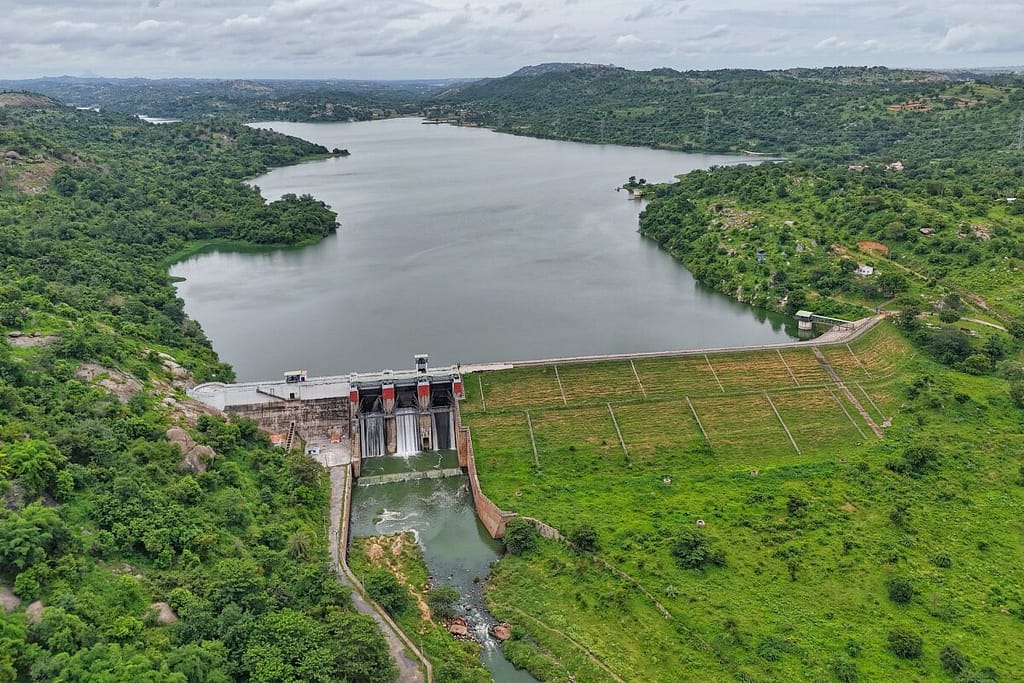
Picture by Vishwanath
Article by Helen Lovell-Wayne, MS
hlovell@gmail.com
agreenerftr.com/https://www.instagram.com/agreenerftr/
https://www.linkedin.com/in/helen-lovell-wayne/
This paper was written with the sole intention of informing consumers about the products they may currently be buying. Hopefully, with enough demand from consumers, industries will supply safer and more sustainable products.
Dams have been built since at least 3000 BCE (A. Angelakis 2024). Following that, other dam construction occurred, but it was rare. Suddenly, in the 1950s, the construction of dams accelerated to at least 1000 dams built per year (A Breitenbach 2012). Dams were built for a variety of reasons, including preventing downstream flooding, creating reservoirs for clean water, generating power, and diverting water to irrigate farms (J Marks 2007). Dam construction improved the quality of life for many communities around the world.
However, creating dams comes at an enormous environmental cost. The first environmental challenge occurs when the dam is being created. During the construction of dams, many items can leak into the soil, including lubricants, gasoline, industrial chemicals, and explosives ( Alla, Y. and Liu, L. 2021). After this phase, the dam can wreak havoc on the river ecosystem. For example, dams are problematic for migrating fish, who physically can’t get upstream (J Marks 2007). Additionally, dams trap sediments needed for deltas, riverbanks, and beaches downstream. Dams also cause the destruction of riverside banks and the resource-rich environmental niche in river banks next to the rivers.
💸 Dam Finances💰
Most dams today are older than 50 years old. They are becoming increasingly more expensive to maintain every year (N. Adamo et al. 2020). Dam maintenance is not considered a budgeting priority, and when it is funded, it isn’t always carried out properly. With this negligence comes a safety hazard, as when the dam fails, the investments below the dam are at risk. So the question becomes whether it is more economical to keep or remove the dam (N. Adamo et al. 2020).
It would take a staggering 70 billion to rehabilitate all the dams in the United States alone (N. Adamo et al. 2020). Many owners cannot repair their dams due to a lack of funding. Public and private dam owners make funding decisions that don’t prioritize non-urgent repairs. In most cases, removing the dam is the more economically feasible option.
🪲Dam Removal Consequences 🍣
On the surface, the solution appears to be simple: remove all the dams in disrepair. Global warming will only increase the pressure on the dam (N. Adamo et al. 2020). So they will likely get destroyed with disastrous consequences down the road. Plus, most dams are no longer needed for renewable energy. Everything points to eliminating most of the dams in the Western world.
On the positive side, dam removal increases water clarity and oxygen levels. This results in an increased population of thriving aquatic insects (Adamo, N et al., 2020). This creates a larger and healthier ecosystem. Additionally, as the water moves freely, its temperature falls, and cold-loving fish species, such as trout, proliferate or return. The carp population, which tends to squeeze out others, dwindles, sometimes disappearing completely (J. Marks 2007). This leads to economic benefits of ecotourism and fisheries thriving again. For more suggestions on ways to improve water quality in general, read Laundry: A Dirty Secret.
or Dishwashing The Inside Scoop
🌊Dam Sediments🐛
However, as with all things in nature, the answer isn’t always linear or cut and dry. Dam removal as a solution is a bit more nuanced. For instance, the built-up sediments behind the dam can have remnants of pesticides or herbicides (A. Lejon, Renofalt, B, and Nilsson 2009). These compounds can contaminate the whole downstream ecosystem (A. Lejon, Renofalt, B, and Nilsson 2009). Plus, even uncontaminated sediment can choke waterways, muddying the environment and wiping out insects and algae, which are important food for fish (J. Marks 2007). Sediments that are not washed downstream can become problematic as well. As they dry out, they may provide fertile ground for potentially noxious exotic plants whose seeds they harbor (E. Stanley and M. Doyle 2003)
To prevent those negative side effects, some dams are being removed gradually (Brown, R. et al 2024). First, the sediment that is contaminated is either removed or treated (McCaffery R. et al., 2024)l. Then the dam is taken down slowly (M. Foley et al 2017). So the sediments don’t flow downstream all at once. This strategy has worked on a few recent dam removals (M. Foley et al 2017). Another solution is to create pathways for migrating fish to bypass the dam, allowing other wildlife to thrive while not removing the dam completely (M. Foley et al 2017). Since the sediments would cause too much of an ecological problem downstream (M. Foley et al 2017).
💦Dam Concluding Remarks💧
Each dam needs to be studied for its environmental impact. The bigger the dam, the more problems decommissioning or removal are likely to entail. More studies are needed to address the costs versus the benefits of each dam removal. A decision concerning how to proceed should be made with all the facts in mind. Each dam removal needs to take economics, safety, ecology, and policy into consideration.
This whole situation shows that when people work together, they can solve challenges that benefit everyone and our overall habitat. Hopefully, this trend will continue. People will not only see the positive outcomes in dam removal but be encouraged to consider other ways to restore nature. Water is the most magical compound on earth. So far, ours is the only planet discovered with water in its liquid form. All cultures need to protect it like the precious resource it is. Then hopefully we can extend our stay on this blue-green planet a little longer.